Central Vietnam has quietly become one of Southeast Asia’s most attractive regions for digital nomads. While cities like Bangkok or Bali often dominate the conversation, Central Vietnam offers a rare balance of affordability, lifestyle quality, cultural depth, and reliable infrastructure—without the crowds.
From coastal cities to historic towns and emerging hubs, this region provides diverse options for remote workers looking for a productive yet meaningful travel experience.
Why Central Vietnam Is Ideal for Digital Nomads

Central Vietnam stands out because it combines modern conveniences with a slower pace of life. Internet connectivity is reliable, living costs remain affordable, and the region offers easy access to beaches, mountains, and cultural heritage sites.
Unlike over-saturated nomad destinations, Central Vietnam allows remote workers to integrate more naturally into local life. Cafés are less crowded, housing is easier to secure long-term, and daily routines feel calmer and more sustainable.
For digital nomads seeking focus, balance, and authenticity, this region delivers long-term comfort rather than short-term novelty.
Da Nang: The Coastal Hub for Remote Workers
Da Nang is widely considered the top digital nomad destination in Central Vietnam. The city offers modern infrastructure, strong Wi-Fi, international amenities, and a growing coworking scene.
Its coastal location provides a healthy lifestyle, with beaches just minutes from residential areas and cafés. Many digital nomads choose neighborhoods near My Khe Beach, where apartments are affordable and daily life is well-suited for remote work.
Da Nang also benefits from an international airport, making travel within Asia convenient. The city feels modern without being overwhelming, which is why many nomads stay for months—or even years.
Hoi An: Slow Living and Creative Energy
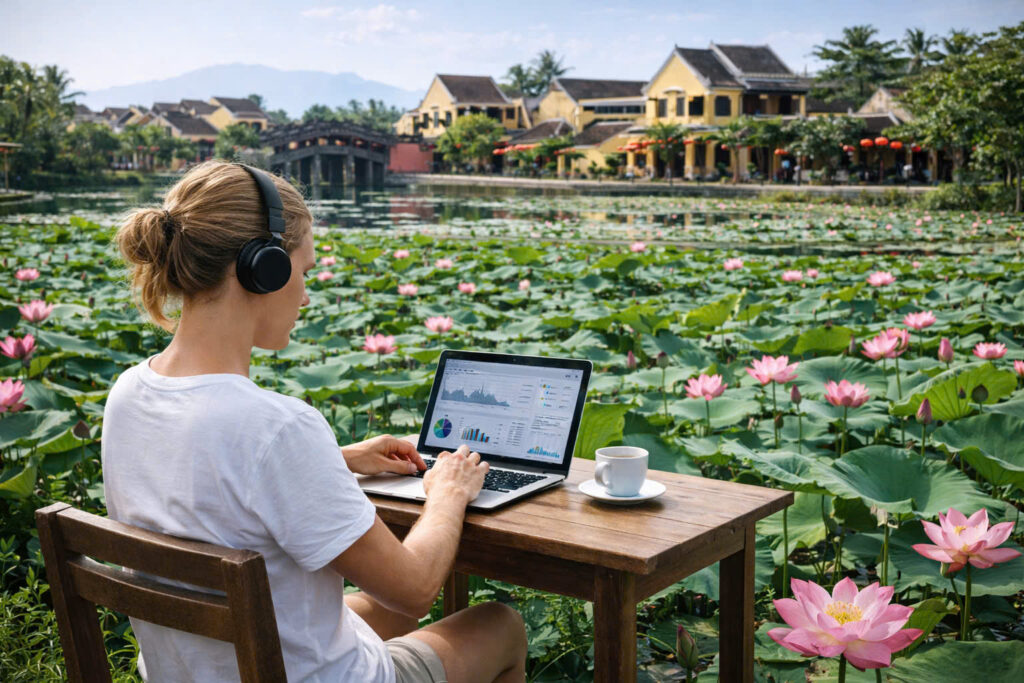
Hoi An attracts digital nomads who prefer a quieter, more atmospheric environment. Known for its historic old town and riverside scenery, Hoi An offers a strong sense of place that appeals to creatives, writers, and designers.
While smaller than Da Nang, Hoi An still provides reliable internet, comfortable cafés, and coworking-friendly spaces. Many nomads live slightly outside the old town to enjoy more space and lower costs while cycling into town for work or social life.
Hoi An is ideal for those who value inspiration, walkability, and a slower daily rhythm over a fast-paced city environment.
Hue: Cultural Depth and Affordable Living
Hue is often overlooked by digital nomads, but it offers unique advantages. As a former imperial capital, Hue is rich in history, architecture, and local culture. Living costs are lower than in Da Nang or Hoi An, making it attractive for long-term stays.
While the coworking scene is still developing, Hue has an increasing number of cafés suitable for remote work. Internet speed is generally stable, and the city’s calm atmosphere supports deep focus.
Hue suits digital nomads who prioritize cultural immersion, affordability, and a quieter lifestyle.
Quy Nhon: An Emerging Nomad Destination
Quy Nhon is one of Central Vietnam’s most promising emerging locations for digital nomads. With beautiful beaches, low population density, and rapidly improving infrastructure, the city is gaining attention from remote workers seeking something new.
Living costs in Quy Nhon are significantly lower than in major cities, and beachfront living is still accessible. While the nomad community is smaller, this can be an advantage for those who prefer minimal distractions and a strong connection to local life.
Quy Nhon is best suited for independent digital nomads comfortable building their own routines.
Cost of Living and Accommodation
One of Central Vietnam’s strongest advantages is affordability. Monthly expenses are generally lower than in many popular nomad hubs across Asia.
Long-term apartment rentals are widely available, especially in Da Nang and surrounding areas. Utilities, transportation, and food remain budget-friendly, allowing digital nomads to maintain a high quality of life without financial pressure.
This affordability supports longer stays and encourages a more stable, productive lifestyle.
Internet, Workspaces, and Daily Productivity
Internet reliability is a key factor for digital nomads, and Central Vietnam performs well overall. Fiber-optic connections are common in cities, and mobile data coverage is strong.
Cafés are widely used as informal workspaces, particularly in Da Nang and Hoi An. Coworking spaces are growing steadily, offering professional environments, networking opportunities, and flexible memberships.
For most remote workers, daily productivity is easy to maintain without extensive planning.
Lifestyle Balance and Well-Being
Central Vietnam supports a balanced lifestyle that many digital nomads seek. Beaches, rivers, and natural landscapes are integrated into daily life rather than treated as weekend escapes.
Outdoor activities such as swimming, cycling, and hiking are easily accessible. Combined with fresh local food and a relaxed pace, this environment encourages both physical and mental well-being.
This balance often leads digital nomads to stay longer than initially planned.
Challenges to Consider
While Central Vietnam offers many benefits, it is not without challenges. Language barriers can exist outside major cities, and healthcare options are more limited than in large international hubs.
The nomad community is growing but still smaller than in places like Chiang Mai or Bali. For some travelers, this means fewer organized events or networking opportunities.
However, for nomads seeking focus and authenticity, these limitations are often outweighed by the overall lifestyle quality.
Conclusion
Central Vietnam offers digital nomads something increasingly rare: space to work, room to breathe, and a genuine connection to place. From the modern coastal energy of Da Nang to the creative calm of Hoi An and the emerging appeal of Quy Nhon, the region provides diverse options for remote workers at different stages of their journey.
For international digital nomads looking beyond mainstream destinations, Central Vietnam is not just a place to work—it is a place to live well.