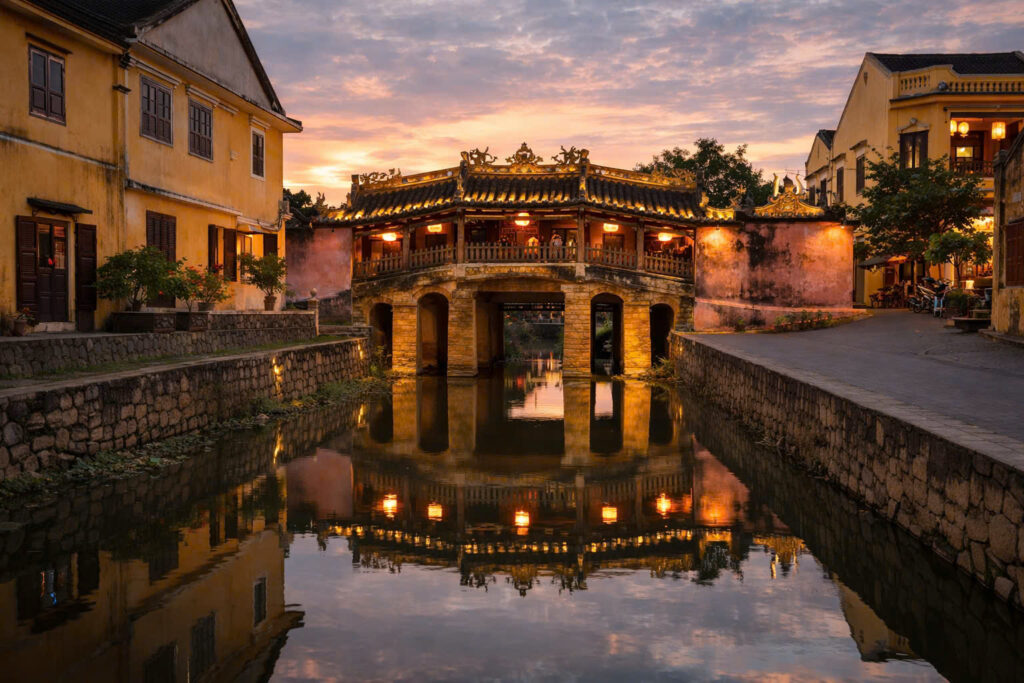
When travelers think of Hoi An, one image often comes to mind first: a small, elegant bridge with a tiled roof, glowing softly under lantern light. More than just a beautiful photo spot, the Japanese Covered Bridge is one of the most meaningful landmarks in central Vietnam. But why is it so important, and why has it become a must-see attraction for international visitors?
To understand the soul of Hoi An, you must understand the story behind this bridge.
A Symbol Born from Hoi An’s Golden Age
Hoi An was once one of Southeast Asia’s busiest trading ports between the 16th and 18th centuries. Merchants from Japan, China, and Europe arrived here to exchange silk, spices, ceramics, and culture. During this time, a Japanese community settled in the town and built a covered bridge to connect their neighborhood with the Chinese quarter across the canal.
This structure later became known as the Japanese Covered Bridge, reflecting the town’s multicultural past. Unlike modern bridges built purely for transport, this bridge was created with deep social, spiritual, and cultural meaning.
Its construction marked a period when different cultures coexisted peacefully and contributed to shaping Hoi An’s unique identity.
More Than a Bridge: A Spiritual Landmark
One of the reasons the bridge is so important lies in its spiritual symbolism. Inside the bridge is a small temple dedicated to a guardian deity believed to protect the town from natural disasters, especially floods and earthquakes.
According to legend, the bridge was built to “seal” a mythical monster whose head was in India, body in Vietnam, and tail in Japan. Earthquakes and floods were said to occur when the monster moved, and the bridge was meant to calm it.
For international visitors interested in folklore and belief systems, the Japanese Covered Bridge offers a fascinating insight into how ancient communities understood nature and spirituality.
Architectural Harmony of Three Cultures
Architecturally, the bridge is a rare blend of Japanese, Chinese, and Vietnamese influences. The curved roof, wooden structure, and decorative motifs reflect Japanese aesthetics, while later renovations added Chinese-style elements. Vietnamese craftsmanship ties everything together through local materials and construction techniques.
Stone statues of a dog and a monkey stand at opposite ends of the bridge. These animals are believed to represent the years in which construction began and ended, according to the lunar calendar. This small detail captivates many visitors who appreciate symbolic architecture.
The bridge’s design is simple yet balanced, making it an excellent example of how function, belief, and beauty can coexist.
A Living Witness to History
Unlike museums where history is displayed behind glass, the bridge stands exactly where it has for centuries. It has survived floods, wars, and time itself. Although restored several times, its original structure and purpose remain intact.
Walking across the Japanese Covered Bridge, visitors are not just sightseeing—they are stepping into a living historical space. This is one of the reasons it holds such significance within the UNESCO-listed Hoi An Ancient Town.
For travelers seeking authenticity rather than replicas, this bridge represents a genuine connection to the past.
Cultural Identity of Hoi An Today
Today, the bridge is more than a historical monument; it is the cultural heart of Hoi An. It appears on postcards, tourism logos, Vietnamese banknotes, and countless travel blogs. It has become a visual shorthand for the town itself.
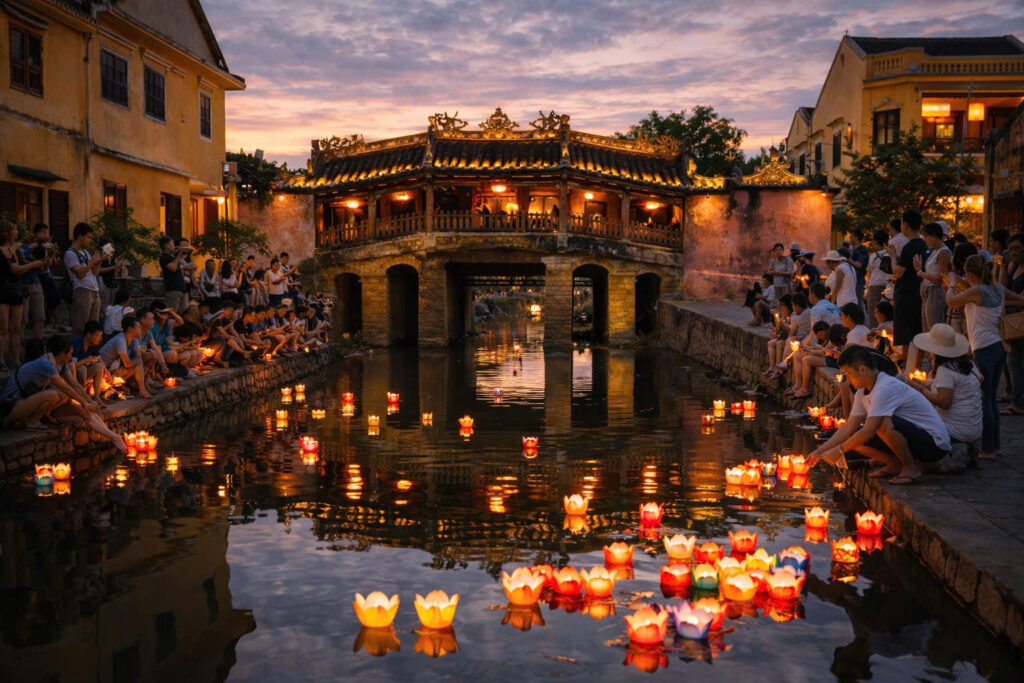
Festivals, traditional events, and night-time lantern displays often revolve around this area. The bridge connects not only two sides of a canal but also past and present, tradition and modern tourism.
When visitors ask locals about Hoi An, the Japanese Covered Bridge is often mentioned with pride, not just as an attraction, but as part of their heritage.
Why International Visitors Find It So Meaningful
For international tourists, especially those interested in history and culture, the bridge offers several layers of meaning:
- It tells the story of early globalization and international trade
- It reflects peaceful cultural exchange rather than conflict
- It showcases traditional Asian architecture in a compact form
- It invites slow travel, observation, and reflection
Unlike large monuments that can feel overwhelming, this bridge feels intimate and approachable. Many travelers say they understand Hoi An better after learning its story.
Best Time to Visit the Bridge
The bridge is accessible all day, but each time offers a different experience. Early morning is quiet and ideal for photography, while evenings bring lantern light and a romantic atmosphere.
At night, reflections on the water and the warm glow of lanterns make the Japanese Covered Bridge one of the most photographed spots in Vietnam. Guided walking tours often stop here to share stories that bring the bridge to life.
A Must-See for Cultural Travelers
So, why is the Japanese Covered Bridge important in Hoi An? Because it represents everything that makes the town special: cultural exchange, spiritual belief, historical continuity, and timeless beauty.
For international travelers looking to move beyond surface-level sightseeing, this bridge offers meaning, memory, and connection. It is not just a place to visit—it is a story to experience.
If Hoi An is a living museum, then the Japanese Covered Bridge is one of its most precious exhibits, still standing, still relevant, and still inspiring visitors from around the world.
2 Trả lời “Why Is the Japanese Covered Bridge Important in Hoi An?”