Located in the center of Hoi An Ancient Town, the Phuc Kien Assembly Hall is one of the most impressive and meaningful historical sites in the city. For international travelers, it offers much more than beautiful architecture. It tells a story of migration, belief, community, and cultural exchange that shaped Hoi An into the unique heritage town it is today.
If you want to truly understand Hoi An beyond lanterns and old houses, this is a place you should not miss.
The History Behind Phuc Kien Assembly Hall
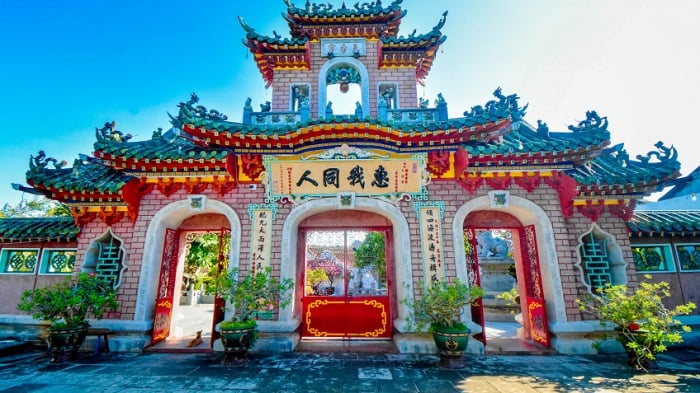
The Phuc Kien Assembly Hall was originally built in the late 17th century by Chinese merchants from Fujian Province (Phuc Kien) in China. At that time, Hoi An was a thriving international trading port, welcoming merchants from China, Japan, and Europe.
Chinese immigrants formed close-knit communities based on their hometowns. Assembly halls served as meeting places, religious centers, and social hubs where members supported each other in business and daily life.
Over time, the hall was rebuilt and expanded, evolving into the grand structure visitors see today. Its long history reflects the important role of the Chinese community in the development of Hoi An’s economy and culture.
A Place of Spiritual Significance
Beyond its historical value, the Phuc Kien Assembly Hall is deeply spiritual. The main deity worshipped here is Thien Hau (also known as Mazu), the goddess of the sea. She is believed to protect sailors, fishermen, and merchants on their journeys.
For centuries, Chinese traders prayed here before setting sail and returned to give thanks for safe voyages. Even today, incense smoke fills the air as locals and visitors come to pray for health, peace, and good fortune.
This living spiritual tradition is one reason the hall feels vibrant rather than frozen in time.
Architectural Beauty and Symbolism
One of the main reasons international visitors are drawn to the Phuc Kien Assembly Hall is its striking architecture. The entrance gate immediately catches the eye with colorful mosaics, curved roofs, and detailed carvings of dragons and mythical creatures.
Inside, the courtyard features a small pond, often associated with harmony and balance in Chinese philosophy. The main hall showcases wooden beams, altars, and intricate decorations rich in symbolic meaning.
Every architectural detail tells a story. Dragons symbolize power and protection, while phoenixes represent peace and prosperity. These symbols help visitors understand traditional Chinese beliefs and values.
Cultural Exchange in Hoi An
Hoi An is famous for its cultural diversity, and the Phuc Kien Assembly Hall is a perfect example of that blend. While the structure reflects Chinese architectural traditions, it was built using local Vietnamese materials and craftsmanship.
This fusion shows how immigrant communities adapted to their new environment while preserving their identity. It also highlights why Hoi An was such a successful trading port: different cultures coexisted, cooperated, and influenced each other.
For cultural travelers, this hall offers insight into early globalization in Southeast Asia.
A Key Stop in Hoi An Ancient Town
Located along Tran Phu Street, the hall is easy to reach and often included in walking tours of the old town. Many guides stop here to explain the role of Chinese communities in Hoi An’s past.
Walking through the Phuc Kien Assembly Hall allows visitors to slow down and absorb the atmosphere. The scent of incense, the quiet prayers, and the aged wooden structures create a sense of calm and reflection.
It is also an excellent place for photography, especially for those interested in architecture and cultural details.
Why International Visitors Love This Site
For travelers from Europe, America, and Australia, the hall offers an authentic cultural experience that goes beyond typical sightseeing. Visitors appreciate:
- Learning about Chinese migration and trade history
- Seeing living religious practices
- Exploring meaningful architecture, not replicas
- Experiencing a quieter, more reflective side of Hoi An
Unlike crowded attractions, the hall invites visitors to observe, learn, and connect.
Best Time to Visit
The Phuc Kien Assembly Hall can be visited throughout the day, but mornings are ideal if you want to avoid crowds and enjoy a peaceful atmosphere. During festivals and special occasions, the hall becomes especially lively with ceremonies and offerings.
It is recommended to dress respectfully, as this is still an active place of worship.
A Window into Hoi An’s Soul
So why is the Phuc Kien Assembly Hall such an important destination in Hoi An?
Because it represents the cultural roots of the town, the spiritual life of its people, and the historical connections that once linked Hoi An to the wider world. It stands as a reminder that Hoi An’s beauty is not only found in its streets and lanterns, but also in the communities and beliefs that shaped it.
For international travelers seeking depth, meaning, and authenticity, a visit to the Phuc Kien Assembly Hall is an essential part of the Hoi An experience.
Một trả lời tới to “Phuc Kien Assembly Hall – A Cultural and Spiritual Heart of Hoi An”