If you have ever seen photos of Hoi An Ancient Town, one thing immediately stands out: the warm yellow walls glowing under the sun, covered with time, moss, and memories. Many international travelers ask the same question when they arrive: Why is Hoi An yellow?
The answer is not just about color. It is a story of history, culture, climate, and preservation—woven together over centuries.
The Color of History
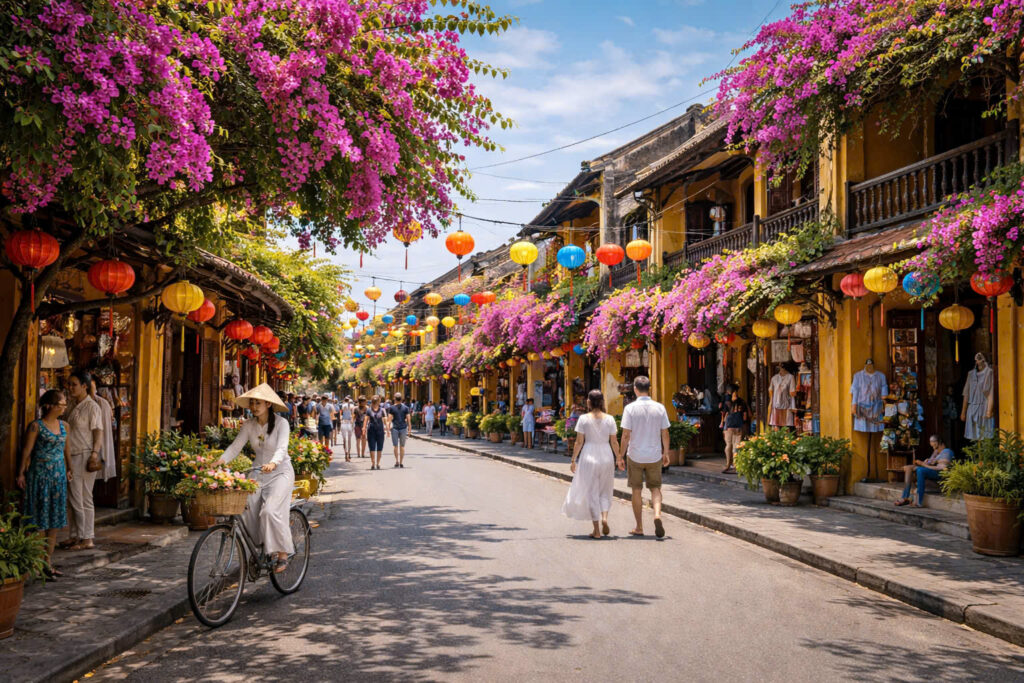
Hoi An’s yellow walls date back hundreds of years, to a time when the town was one of Southeast Asia’s most important trading ports. From the 16th to the 18th century, merchants from China, Japan, and Europe lived and traded here.
Back then, modern paint did not exist. Houses were built using traditional materials such as brick, lime, sand, and natural binding agents like sugarcane syrup or plant resin. When lime-based plaster aged over time, it naturally turned into soft shades of yellow and ochre.
The older the building, the deeper and warmer the yellow became. In this way, yellow is not just a design choice—it is a visible sign of age and authenticity.
Traditional Materials Create Natural Yellow Tones
Unlike modern paint, traditional lime plaster “breathes.” It absorbs moisture, reacts with sunlight, and slowly changes color. This natural aging process gives Hoi An its signature look: walls that feel alive rather than flat or artificial.
Because these materials were locally sourced and handmade, no two buildings have exactly the same shade of yellow. Some lean toward pale cream, others toward deep mustard or golden earth tones. This variation adds to the charm and organic beauty of the old town.
For visitors, it feels like walking through a living painting rather than a preserved museum.
The Cultural Meaning of Yellow in Asia
In many Asian cultures, yellow carries powerful symbolism. It represents prosperity, stability, harmony, and good fortune. In ancient times, yellow was often associated with royalty and spiritual balance.
Hoi An was once a wealthy trading port, and many merchants believed that yellow brought luck and success in business. Using yellow on walls and temples reflected hopes for long-term prosperity and peace.
This cultural meaning made yellow a natural and meaningful choice for homes, assembly halls, and communal spaces.
A Smart Response to Central Vietnam’s Climate
Hoi An is located in central Vietnam, where the climate is hot, sunny, and humid for much of the year. Yellow and other light earth tones reflect sunlight better than dark colors, helping keep buildings cooler inside.
Traditional builders understood this well. Yellow walls reduced heat absorption while also hiding stains, dust, and signs of weathering better than white walls would.
In other words, yellow was not only beautiful—it was practical.
Preservation Rules Protect Hoi An’s Identity
Today, Hoi An is a UNESCO World Heritage Site, and preserving its historical appearance is a top priority. Local authorities have strict regulations to maintain visual harmony in the old town.
Building owners are encouraged—or required—to use traditional yellow tones when restoring or repainting old houses. Bright modern colors or contemporary paint finishes are not allowed in the core heritage zone.
Thanks to these preservation efforts, Hoi An has avoided becoming a patchwork of styles. Instead, it remains visually unified, calm, and timeless.
Yellow as the Perfect Canvas for Lanterns
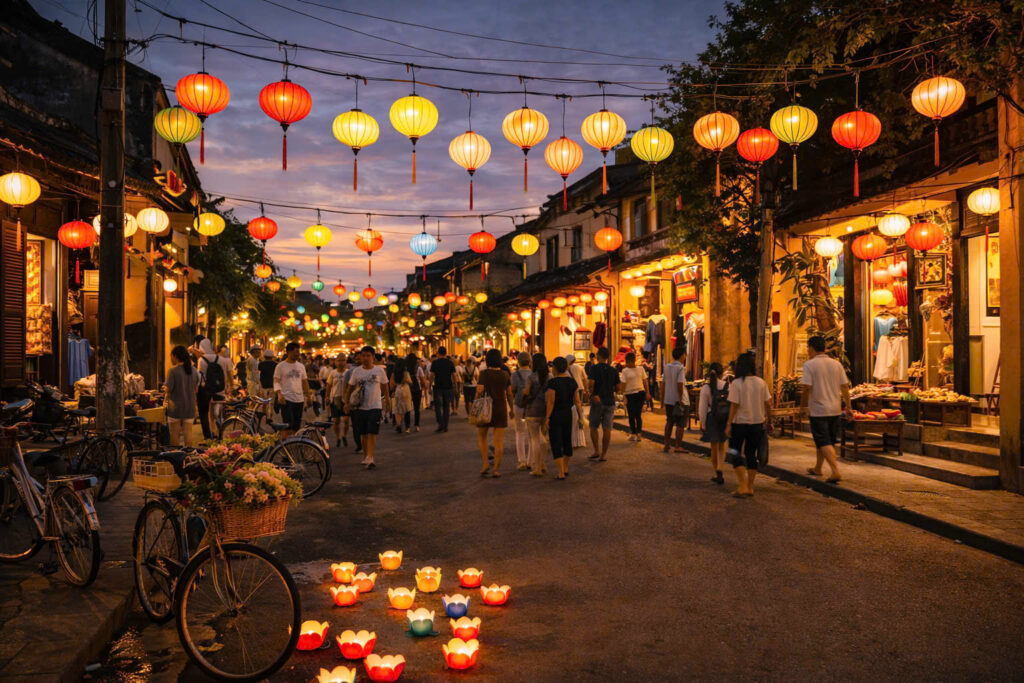
Hoi An is famous for its lanterns, especially at night. The yellow walls act as the perfect backdrop for lanterns in red, blue, pink, and silk white.
During the day, yellow reflects sunlight and creates a warm, welcoming atmosphere. At night, lantern light softens the yellow walls, making the town glow gently instead of shining harshly.
This harmony between wall color and lighting is one reason Hoi An feels romantic, peaceful, and deeply atmospheric—especially for first-time visitors.
The Color of Time, Memory, and Emotion
More than anything, yellow in Hoi An represents time. Moss grows slowly on yellow walls. Cracks appear gently, not dramatically. The color softens with rain, sunlight, and years passing by.
For many travelers, yellow becomes emotional. It feels nostalgic even if they are visiting for the first time. It reminds people of old photographs, childhood memories, or places where time moves more slowly.
This emotional connection is one reason so many visitors fall in love with Hoi An.
Why Hoi An’s Yellow Feels So Unique
Many cities have old buildings, but few have preserved their original atmosphere as carefully as Hoi An. The yellow here is not decorative—it is inherited.
It reflects:
- Traditional construction methods
- Cultural beliefs about harmony and prosperity
- Climate adaptation
- Long-term preservation efforts
Together, these elements create a color identity that cannot be copied elsewhere.
So, Why Is Hoi An Yellow?
Hoi An is yellow because history made it that way.
Because tradition preserved it.
Because culture gave it meaning.
And because time continues to paint it, slowly and beautifully.
When you walk through Hoi An Ancient Town, you are not just seeing a color—you are seeing centuries of life written on its walls.